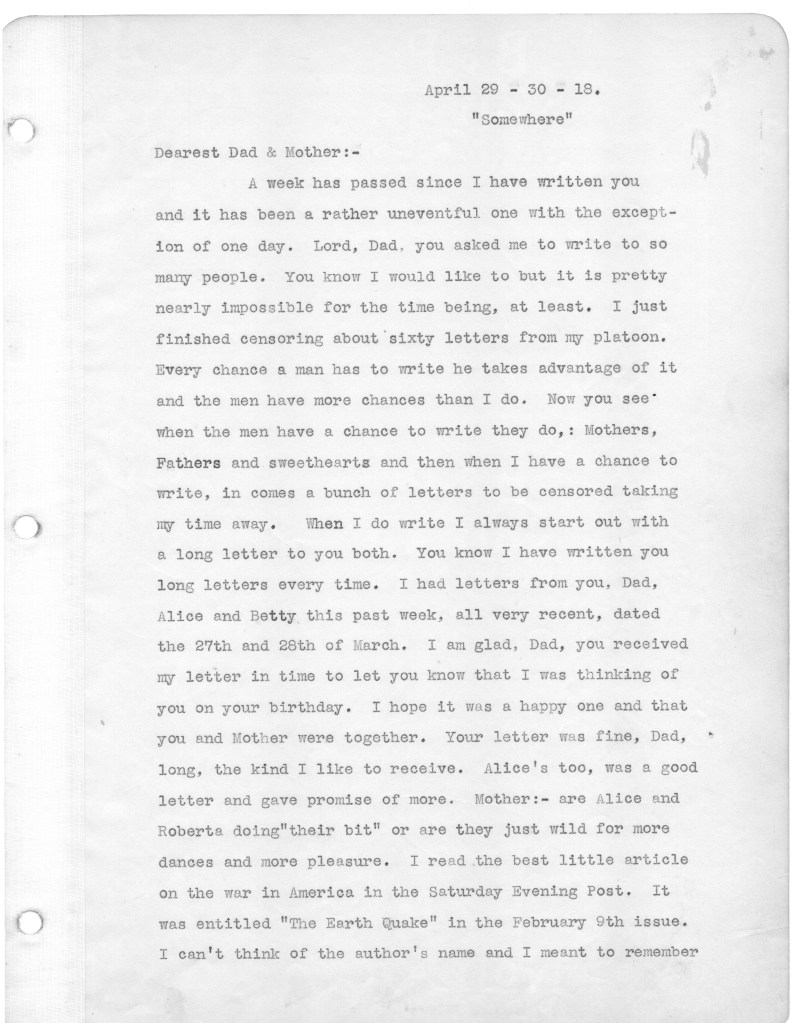
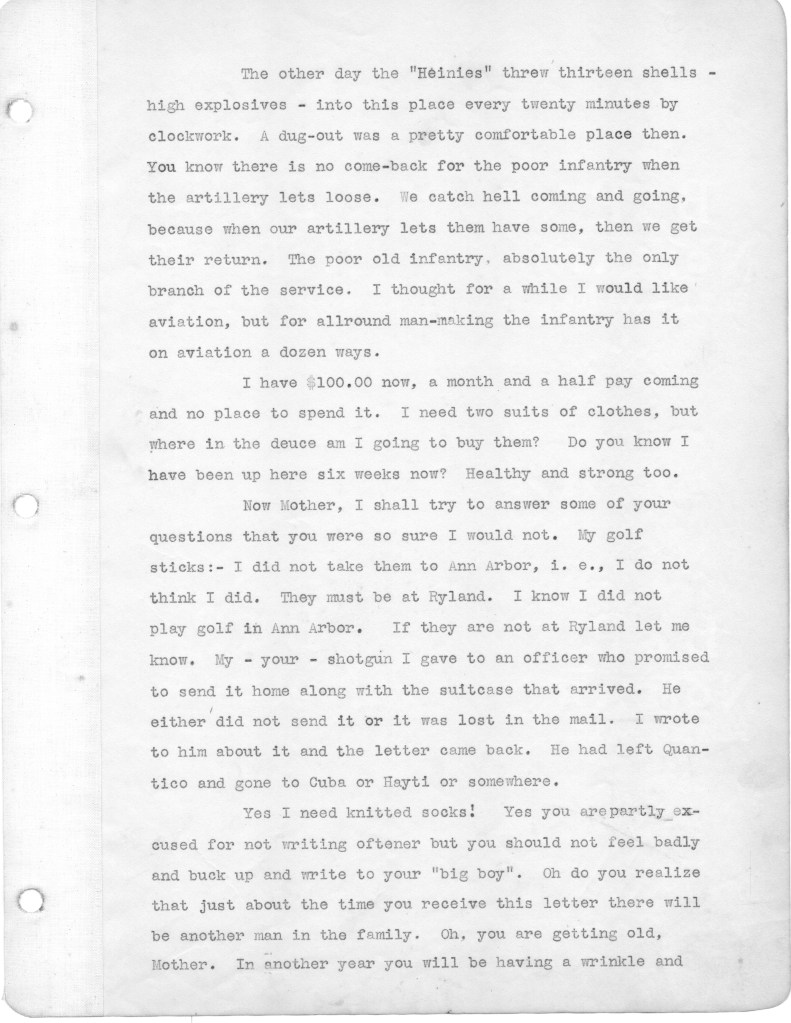
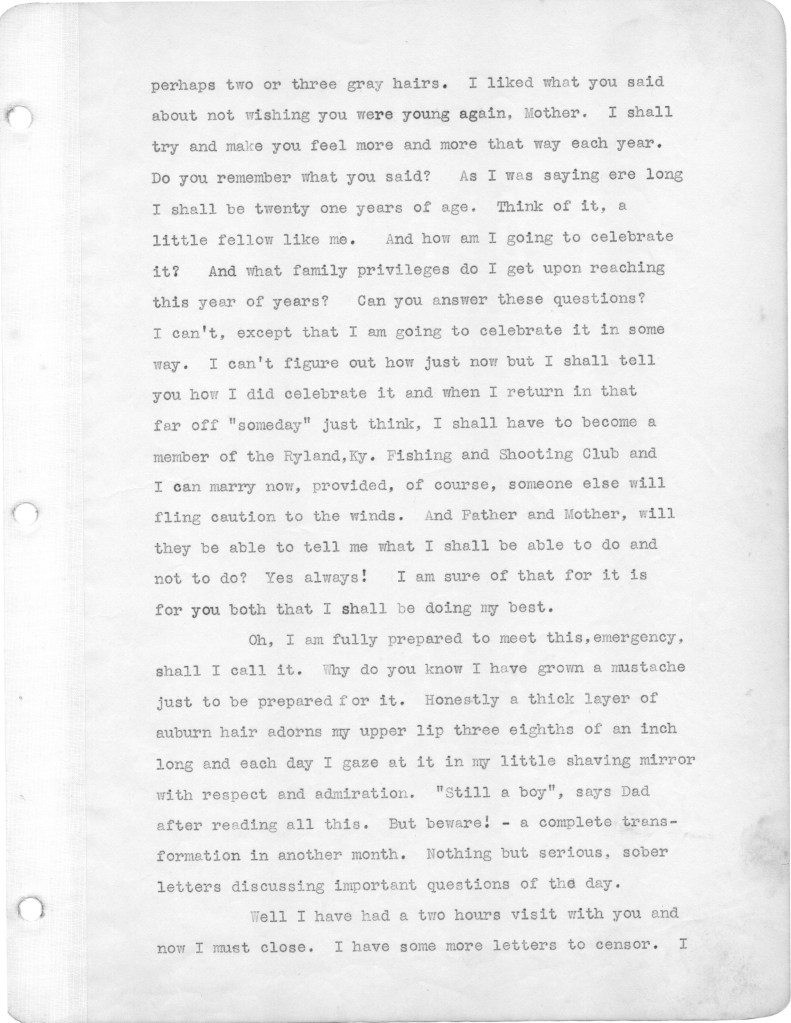
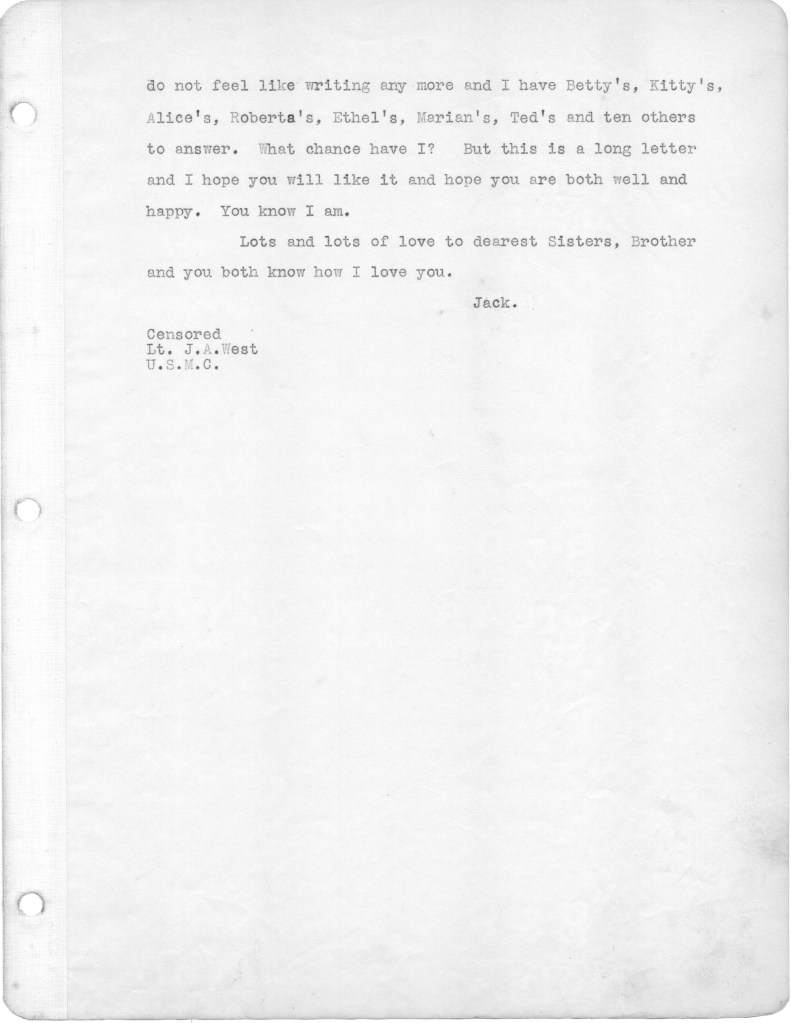
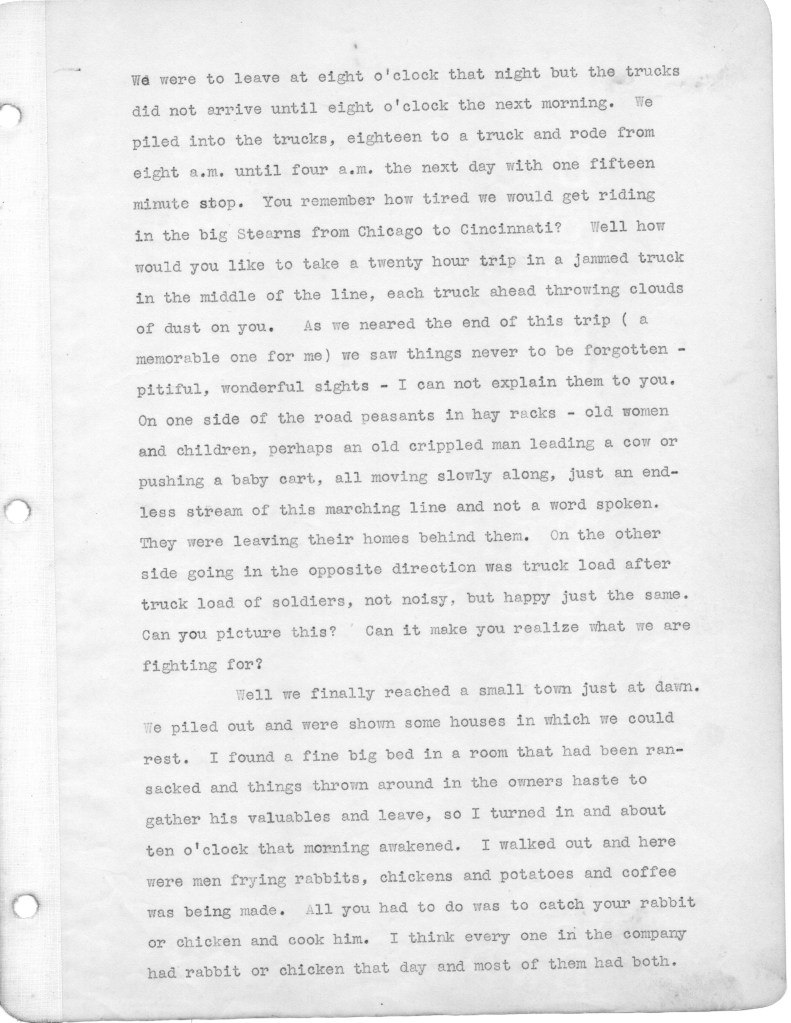
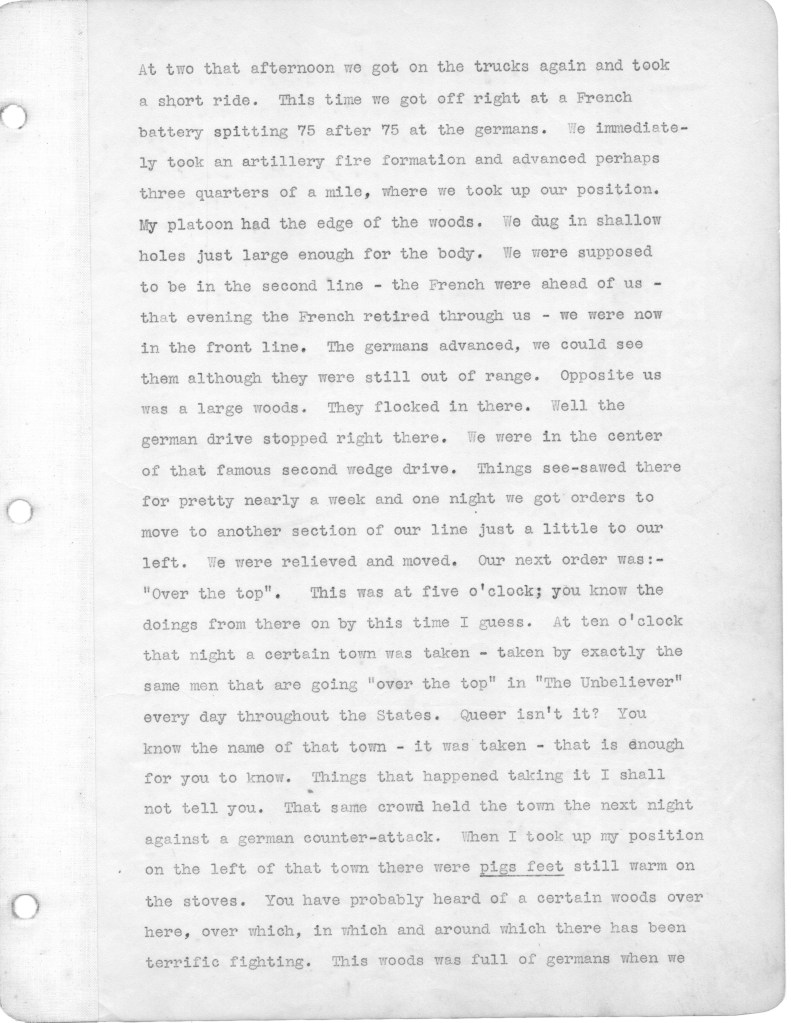
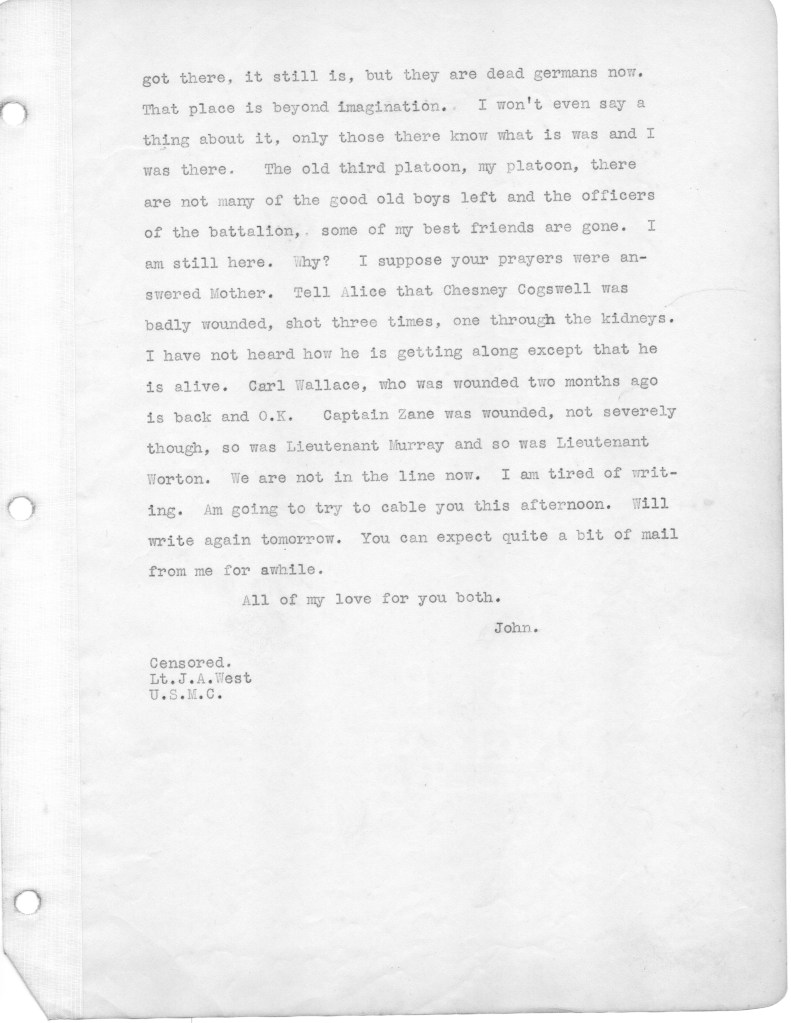
Published below are a few more of my father’s war letters written home from France, covering April to July 1918. During this time the German Army launched a major last-ditch offensive on the Western Front intended to defeat the Allies before the newly arriving U.S. troops could be fully deployed.
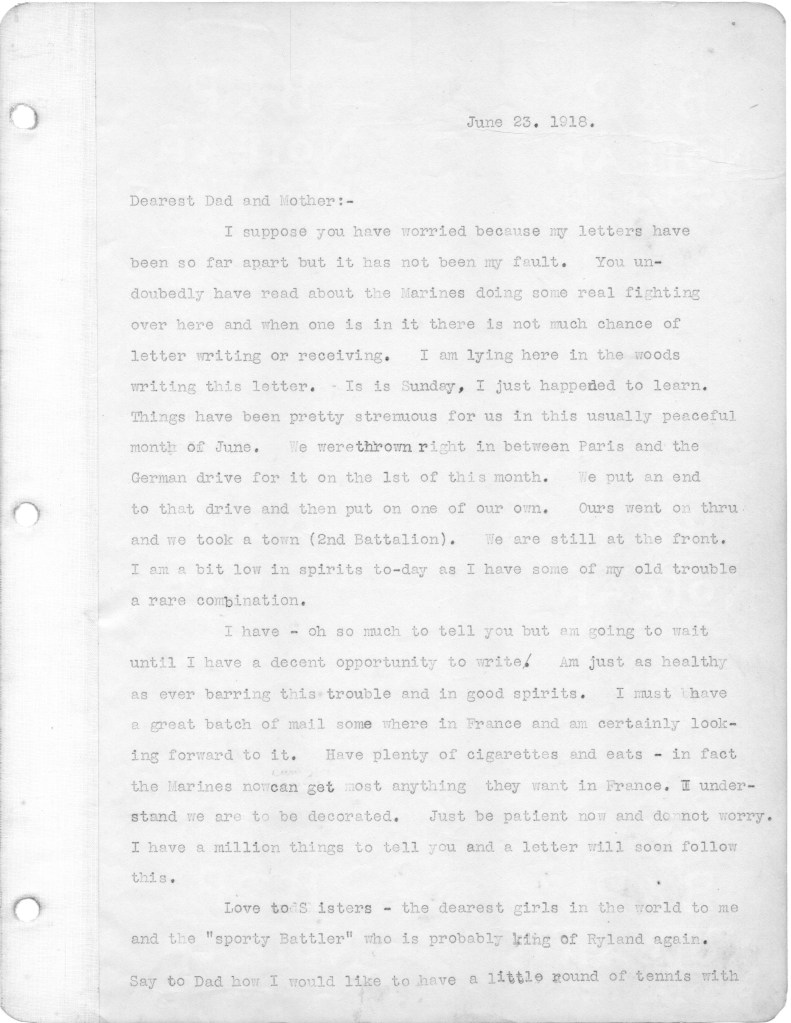
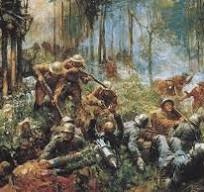
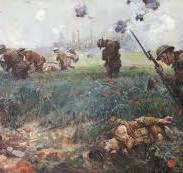
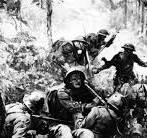
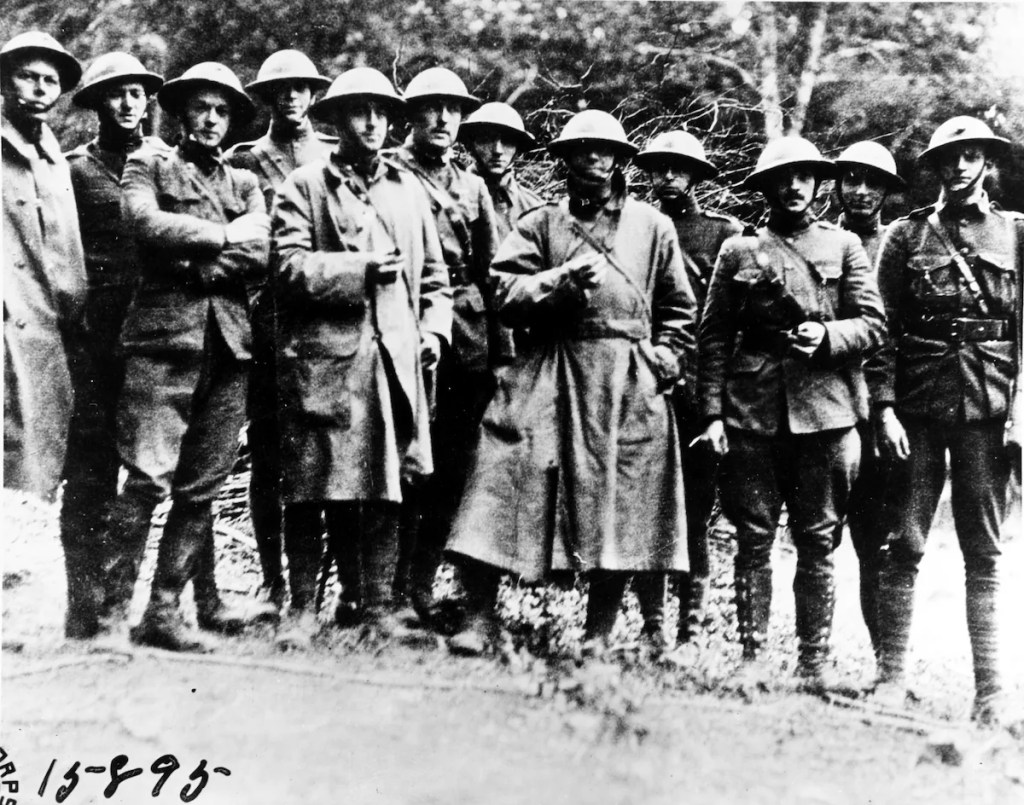
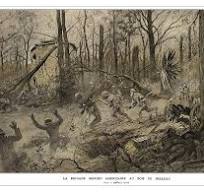
Now enshrined in Marine Corps history, the Battle of Belleau Wood was fought during this engagement, lasting almost the entire month of June 1918. It was the first major engagement of U.S. Marines in the war. As reflected in one of my father’s letters, the Marines believed at the time that they were all that stood between the German Army and the City of Paris. Military historians have since concluded that Ludendorff, the head of the German High Command, had no intention of capturing Paris, rather intending to encircle the city from the west in a siege-like manoeuver. Whatever the truth of the matter, it is agreed that the battle was crucial to the Allied cause as it tied down German troops that might have been deployed elsewhere, and bled and further demoralized the German Army.
The battle was a victory for the Marines, the woods (about 200 acres large, the size of a small town) being cleared of all German units by the end of June. The victory came at a high cost – 1800 dead, and over 5000 wounded for the Marines alone. The German casualties were much higher. During the battle, the Germans coined a nickname for Marines that stuck – “devil dogs.”
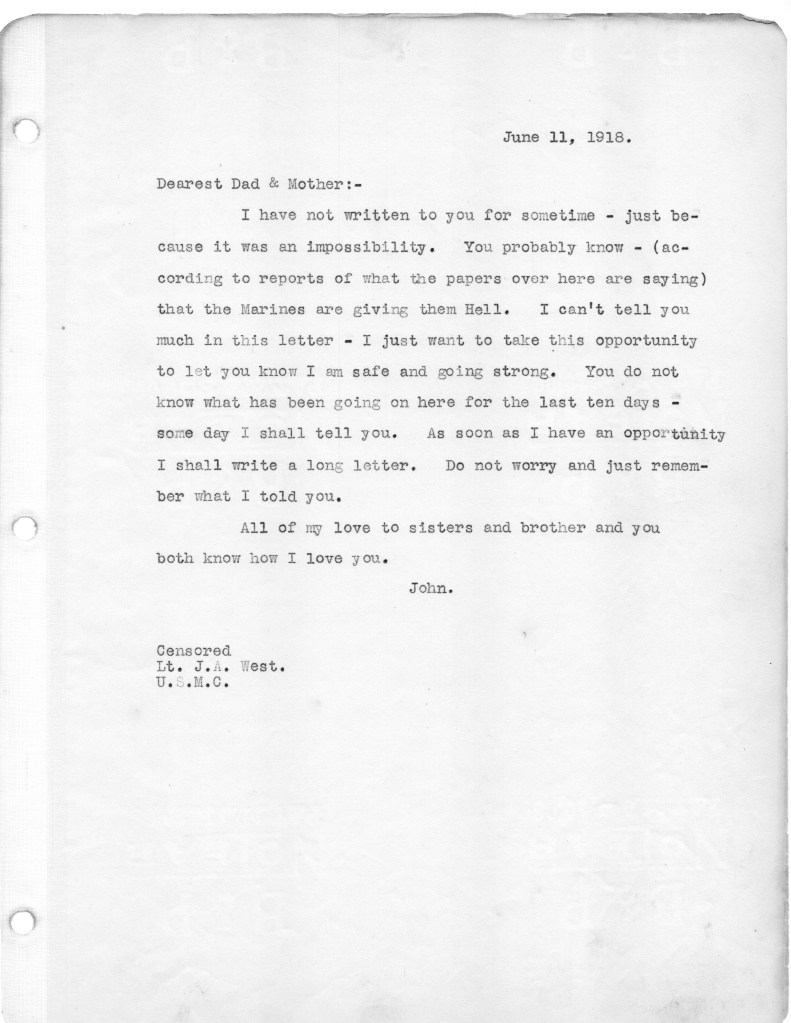
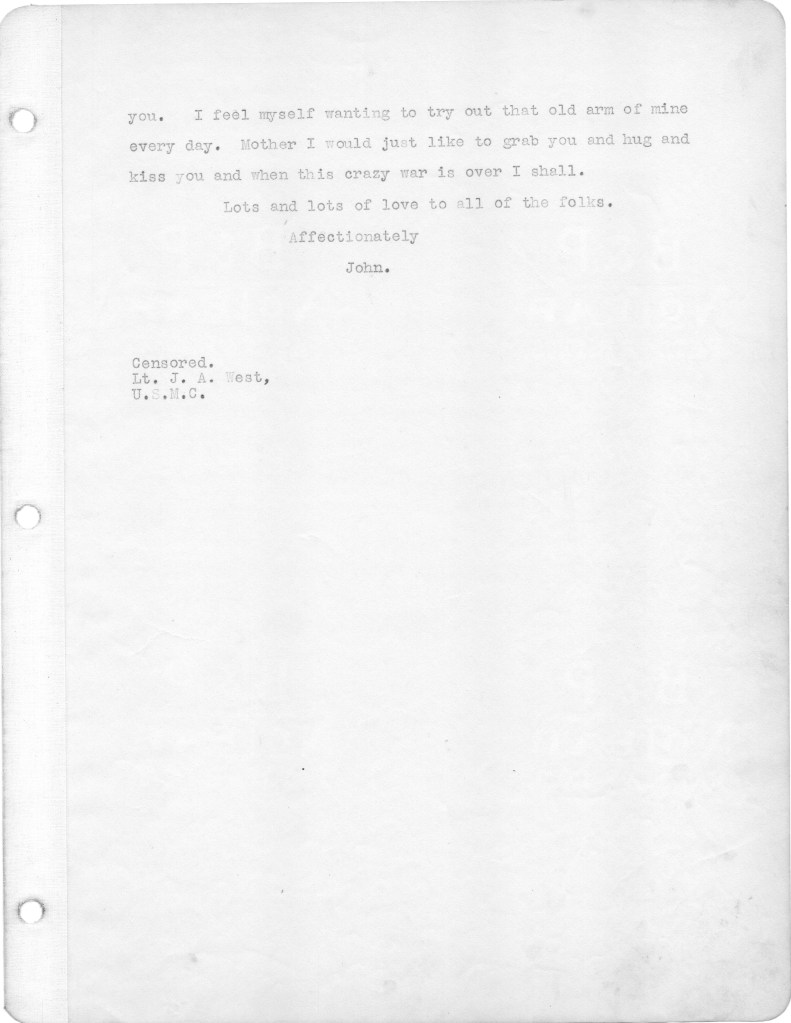
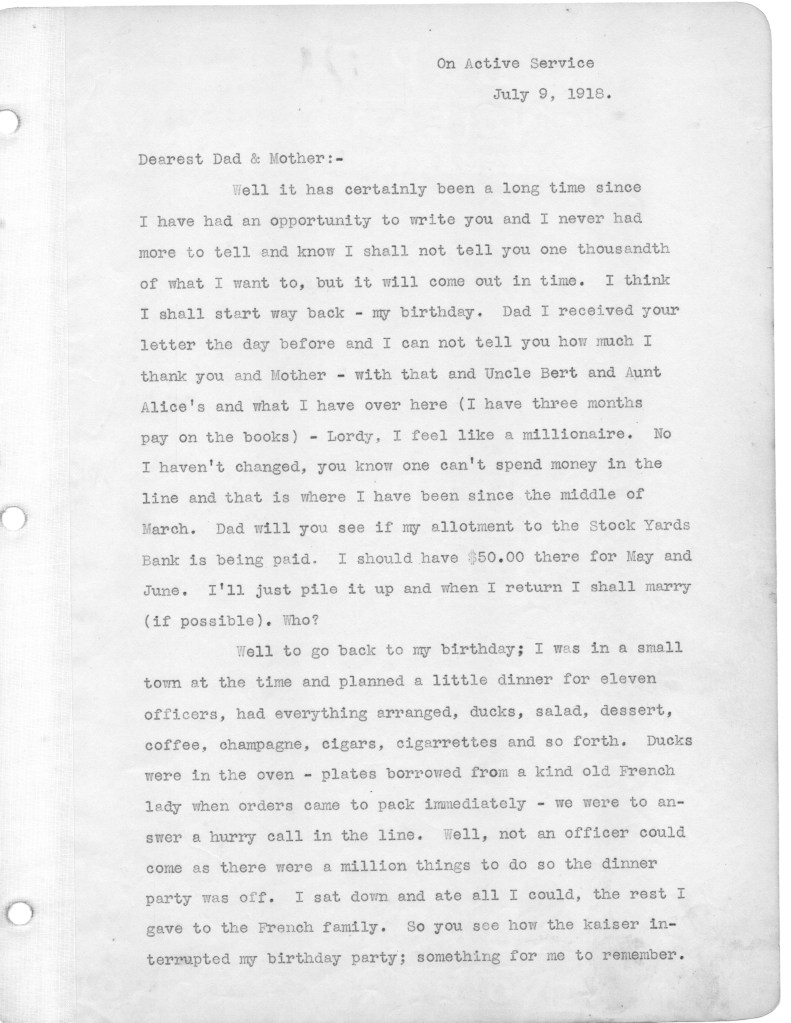
Reading these letters I continue to be dumbfounded by my father’s naivete. Despite men being killed and horribly wounded all around him, the war still is high adventure for him, his unspoken premise being that he would not become a casualty, and would live to tell the story of this fateful battle. He did that by writing a memoir of the battle in 1930 after visiting the site of the battle and the American Cemetery nearby. I intend to publish the memoir after finishing the letters.
Several notable quotes came out of the Battle of Belleau Wood, which has become part of Marine Corps lore. The first came from General Pershing, the Supreme Commander of the American Expeditionary Forces in France. After the victory at Belleau Wood, he paid tribute to the Marines, saying: “The deadliest weapon in the world is a Marine with his rifle.” High praise indeed from an Army man.
Another quote that is now part of Marine DNA came from an officer, a Captain Williams, who disobeyed an order to pull back after arriving at the front line, saying “Retreat hell, we just got here.” Finally, with orders to go over the top, Marine Sergeant Dan Daly, himself the winner of two Medals of Honor, rallied his men with the cry: “Come on you sons of bitches. Do you want to live forever!”
To my readers who disdain any discussion of war, my apologies for this post. I understand that war in all its brutal forms is a ghastly denial of our humanity. My intention here is not to glorify war, or my father’s participation. It is simply to honor his memory and give daylight to the scraps of paper (his letters) that memorialize his life at that time.
But, as horrible as war is, we would have no United States of America, without a ragtag army of patriots fighting and beating the British Army to win the Revolutionary War. We would not have kept our country without brave Americans fighting and dying at Bull Run, Antietam, Gettysburg, and a score of other battles that preserved the Union. And one shudders to think of what our world would be like if brave American soldiers had not stormed the beaches of Normandy to eventually defeat the scourge of Nazism, and fought in the Pacific to defeat the Japanese Empire.
War, it seems, will always be a feature of the human condition. So reputedly said Plato: “Only the dead have known the last of war.”
April 29-30, 1918

June 11, 1918
June 23, 1918
July 9, 1918
War Poetry
Amid its horrors, World War I was notable for the poetry that the war inspired. Most notable was the poem In Flanders Fields by John McCrae, a Canadian poet, doctor, and soldier who served in the Canadian Army during some of the bloodiest fighting early in the War. Here is the text of this moving poem:
In Flanders fields the poppies blow
Between the crosses, row on row
That mark our place; and in the sky
The larks still bravely singing, fly
Scarce heard amid the guns below
We are the dead. Short days ago
We lived, felt dawn, saw sunset glow,
Loved and were loved, and now we lie
In Flanders fields.
Take up our quarrel with the foe:
To you from failing hands we throw
The torch, be yours to hold it high.
If ye break the faith with us who die
We shall not sleep, though poppies grow
In Flanders fields.
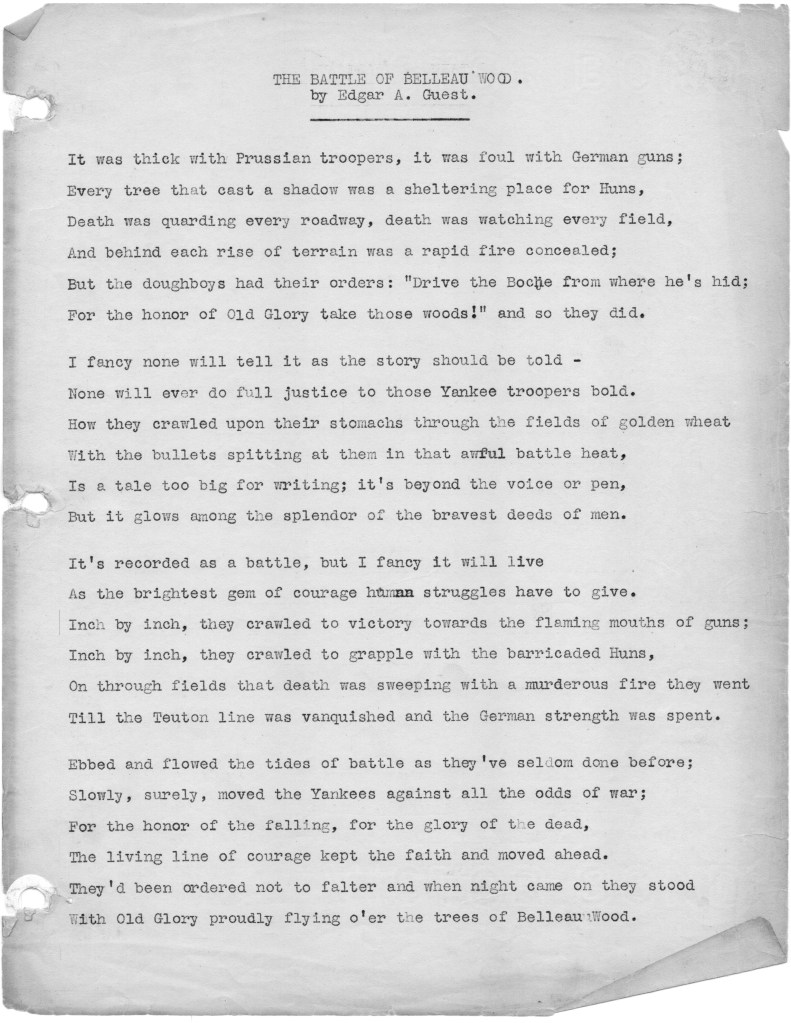
Edgar Guest was not a poet of the caliber of John McCrae, and he did not serve in the war. Known as “the People’s Poet” he wrote light poetry for a certain audience that made him him popular in his day. Why he wrote a poem about the Battle of Belleau Wood is beyond me, but the poem is included with my father’s letters, and I reprint it here:
Below are several images of the Battle of Belleau Wood:
 Westwind
I will read these when I get home tomorrow or next day.
<
div dir=”ltr”>
<
blockquote type=”cite”>
LikeLike
Good morning cous
LikeLike
Elizabeth: WP cut off your comment after the first two letters of the first word. I’m not sure why WP does this but I have had problem with several comments. If you like please send by email. J.
LikeLike
Hello cousin John, Thank you again for sharing your father’s letters. He was an amazing man. His writing reminds me of Ernest Hemingway’s story telling. He seemed to have an uncanny ability to stay positive in some horrendous situations. Was he like that when you were growing up? I was happy to hear that you and Ginger have moved back to Kentucky to be near family and friends. It has been a terrible three weeks watching our democracy crumble under these two men with no visible morals. X seems to have more sense! I just sent an article about my grandfather’s life to the Perry Historian. Hopefully, it will be in the March newsletter. I will be happy to forward it to you then. Take care, Liza
>
LikeLike